Fire safety work, evidenced across every site

Fire safety management software for UK estates

IGNIS holds the whole cycle in one record: buildings, assets, checks, findings and the evidence behind them. The person carrying the duty can show exactly what has been done, and when.

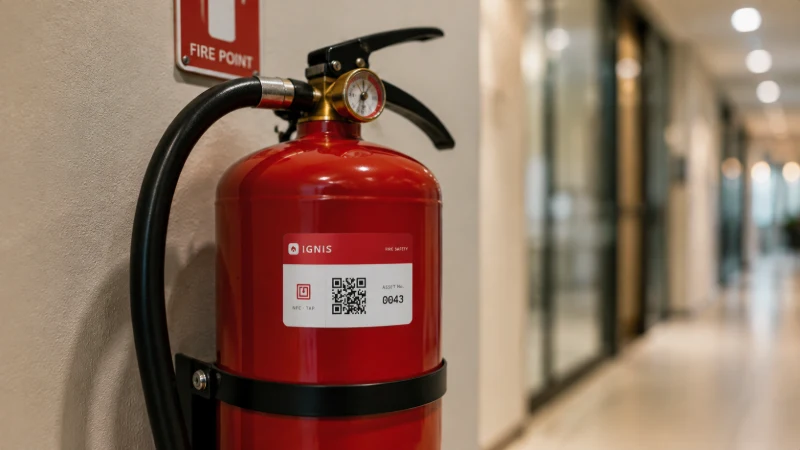
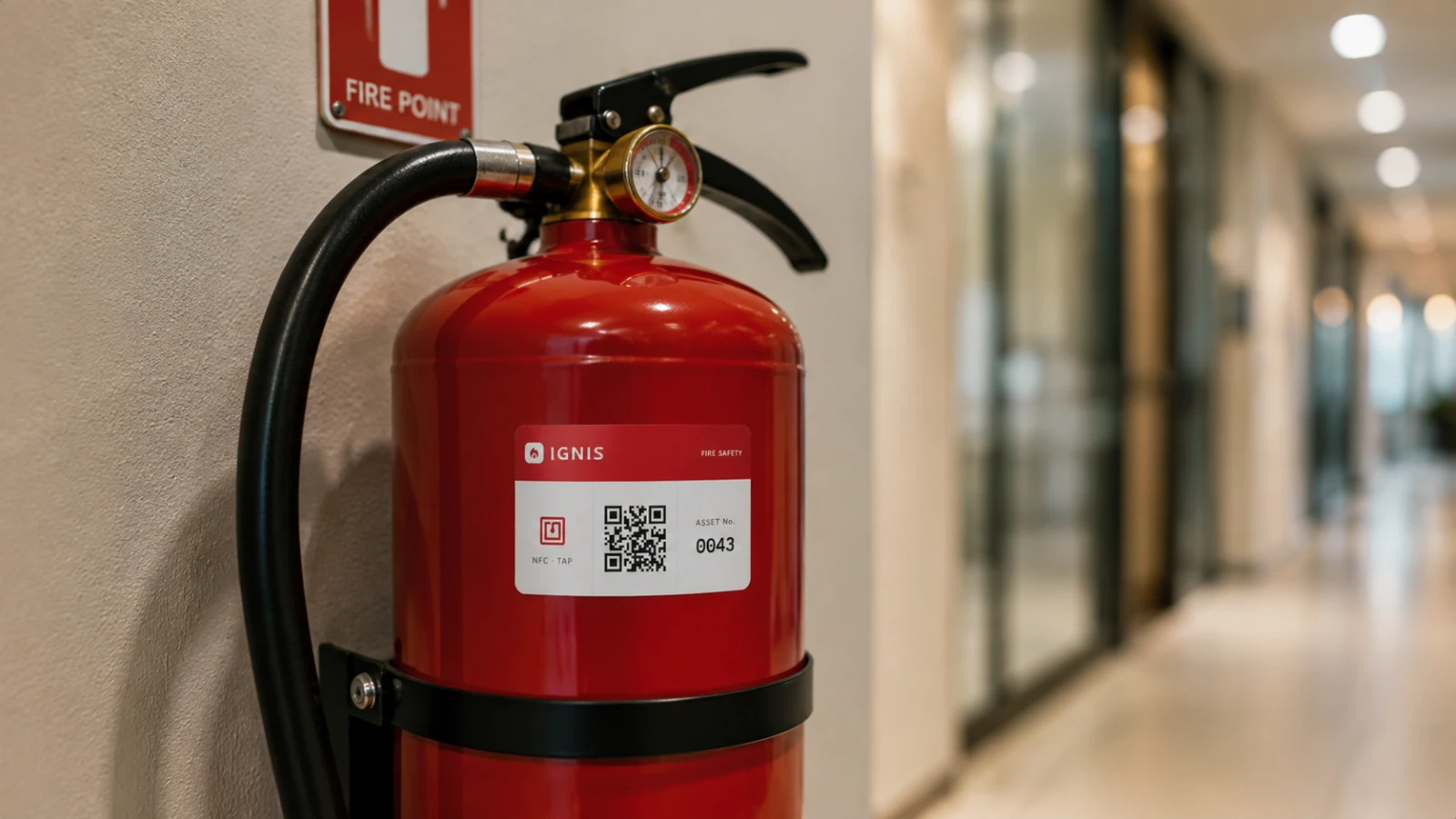
A fire extinguisher on a corridor wall below a fire point sign, carrying an IGNIS tag: the wordmark, an NFC touch point, a QR code and the asset number.

One team, every building accounted for

Explore the platform

The building record assembles itself

Fourteen tabs against one building: what is due, what is open, who holds the duty, what was found and where the evidence sits. Read live from the records the rest of the platform writes, not compiled the night before.
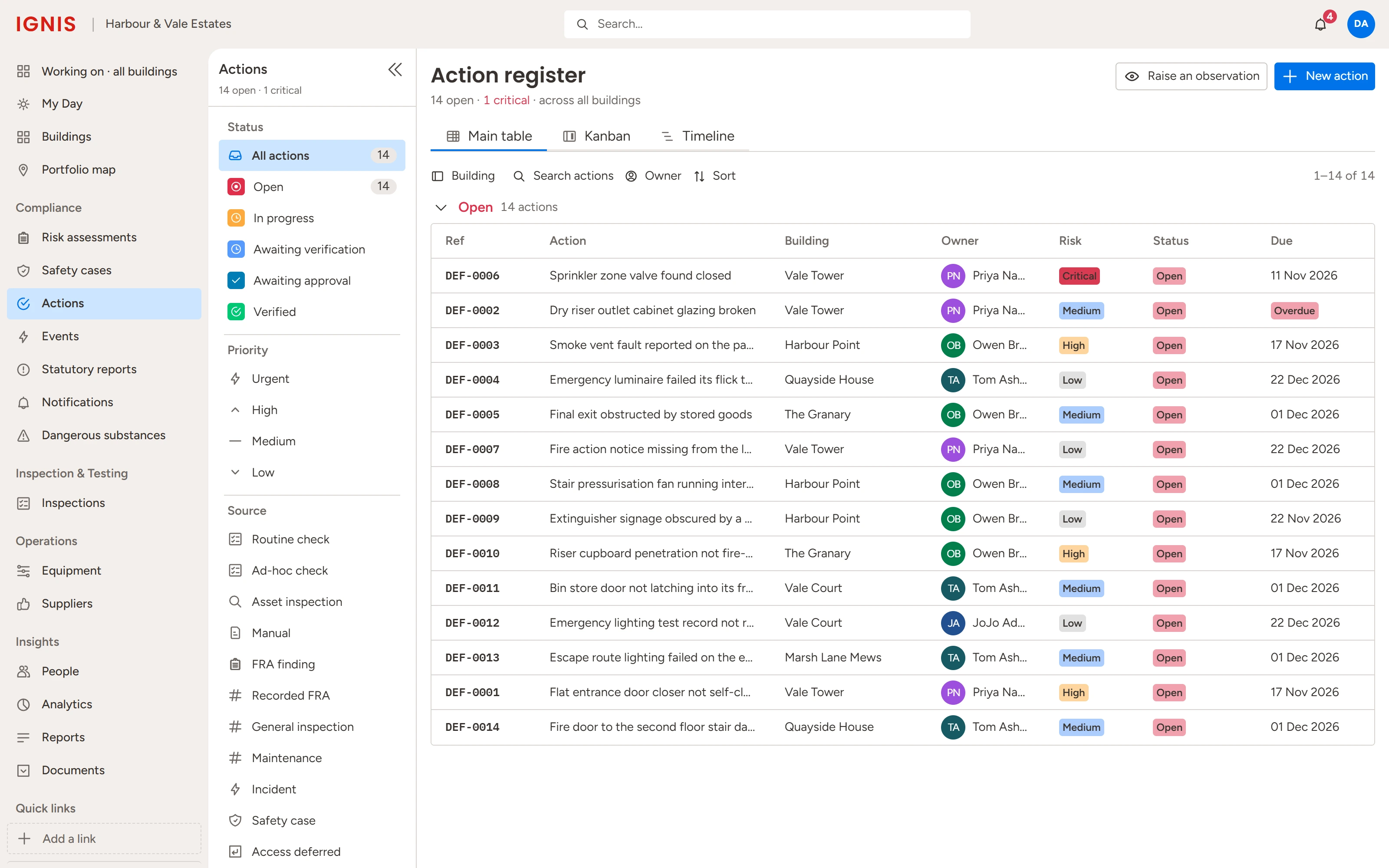
Every finding becomes an owned, dated action

A failed check, an assessment finding, a drill debrief, an event or a hazard reported on a walk-around all land on the same register, with an owner and a due date already set. Closure needs evidence, not a tick.

Statutory intervals, worked without a spreadsheet

Each asset class carries its standard check interval, with your own overrides where you need them. IGNIS raises the due records, builds the worklists and walks them in rounds.

The statutory checks, already defined

Each one arrives with its interval, the asset class it applies to and the standard it is worked to. Override an interval where your own regime is tighter; the record still says what it was worked to.

  • BS 5839-1
    Weekly fire alarm test · BS 5839-1:2025
  • BS 5839-1
    Quarterly fire alarm service · BS 5839-1:2025
  • BS 5266
    Monthly emergency lighting
  • BS 5266
    Annual emergency lighting duration test
  • BS EN 12845
    Weekly sprinkler test · BS EN 12845 / LPC Rules TS203
  • BS 9990
    Six-monthly dry riser test
  • BS 5306-3
    Annual extinguisher service
  • BS 8214
    Annual fire door inspection
  • BS 8214
    Quarterly fire door inspection · higher-risk
  • PAS 79
    Fire risk assessment review
  • RRO 2005 art. 15
    Evacuation drill record
  • RRO 2005 art. 15
    PEEP review

Every check carries the standard it is worked to

Intervals are not typed in by hand. Each asset class arrives with the interval its standard sets, so nobody on your team has to remember which one applies to what. Every record says which standard it was worked to.

Written from the job, not from a specification

Aspis Consulting Group assessors write fire risk assessments, run statutory checks and answer enforcement questions on real estates every week. Every screen in IGNIS started as something one of them needed on a job and could not get.

Built inside a fire safety consultancy, for the teams that carry the duty

  • Housing providers
  • NHS trusts
  • University estates
  • Managing agents
  • Industrial sites
  • Mining operations

How IGNIS closes the loop on a building

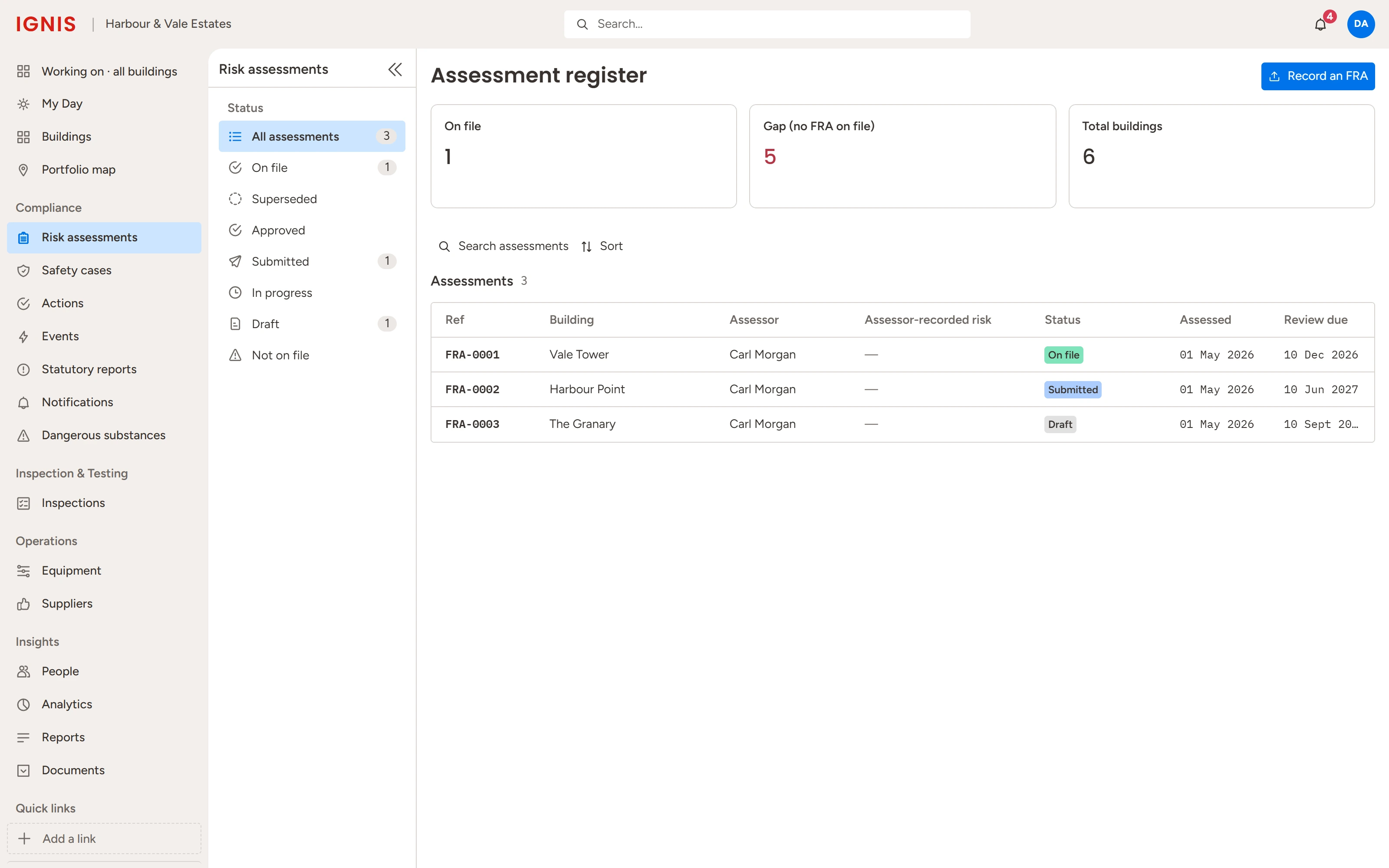
The IGNIS fire risk assessment record: assessments per building with review dates and the findings they raised.
Assess

Record the assessment once, and it starts working

Record a fire risk assessment against the building, yours or an external assessor's, and its findings become owned, dated actions on the main register. Current and archived versions stay attached with their open actions counted, and a lapsed review date surfaces rather than sitting quiet.

A guided assessment authoring workspace is in build; see the roadmap. Today IGNIS records an assessment and works its findings. It does not yet author one.

Fire risk assessments
The IGNIS action register: every finding with an owner, a due date and a severity, whatever raised it.
Track

One register for every open thing on the estate

Actions carry a severity, an owner and a due date wherever they came from. Ageing and closure rates break down by site, owner and category, so the overdue critical item on one building is not hidden inside an estate-wide average.

Action tracking
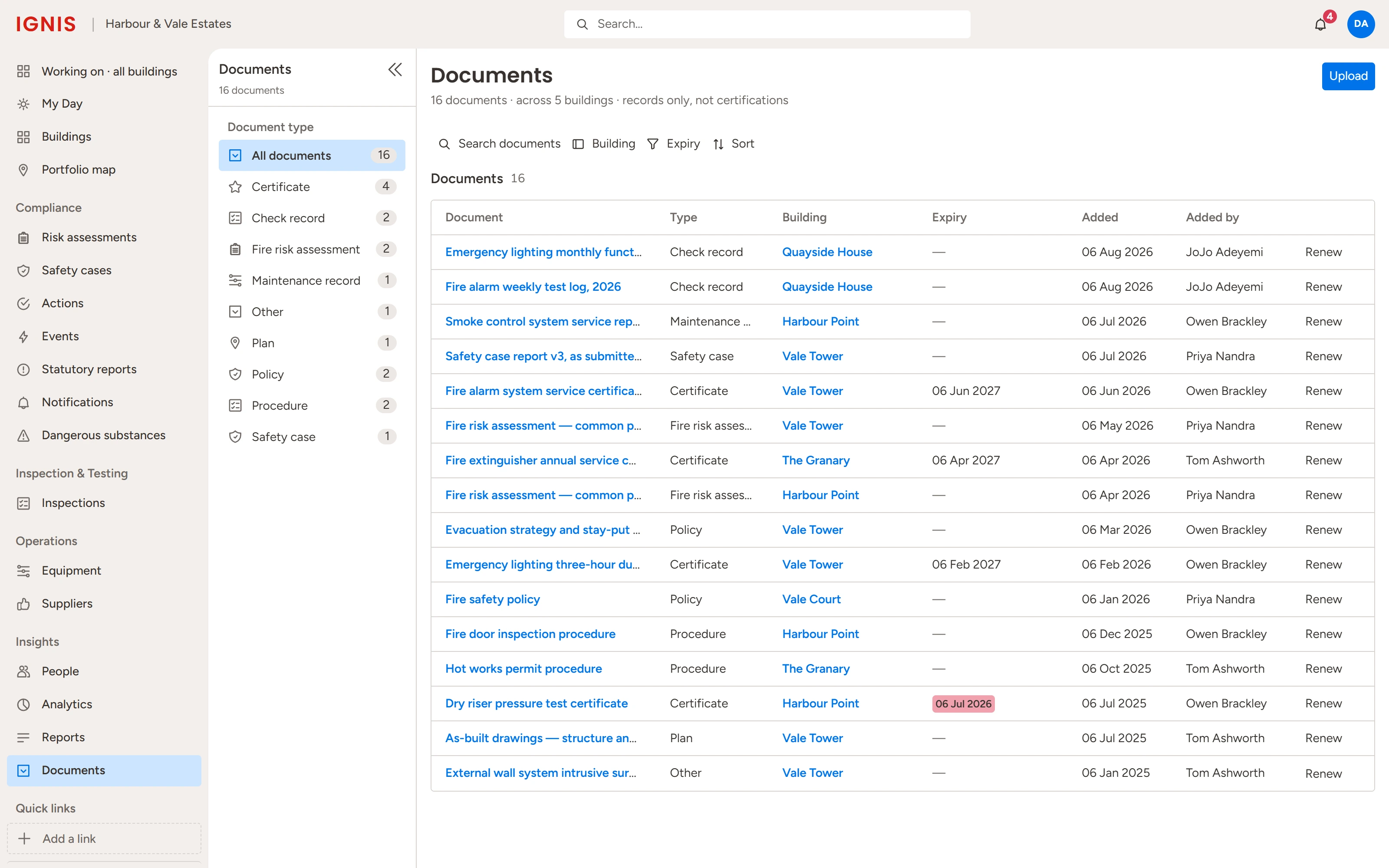
The IGNIS document register: certificates, plans, policies and reports held against the building they belong to, grouped by document type.
Evidence

The evidence sits against the thing it evidences

Certificates, plans, reports and photographs are held against the building and the action they close, not in a shared drive nobody can search. For higher-risk buildings the golden thread store versions each item and keeps its supersede history, and coverage is recorded against each requirement.

IGNIS records and organises. It does not submit to the Building Safety Regulator, and it makes no determination about whether a duty has been met.

Building Safety Act
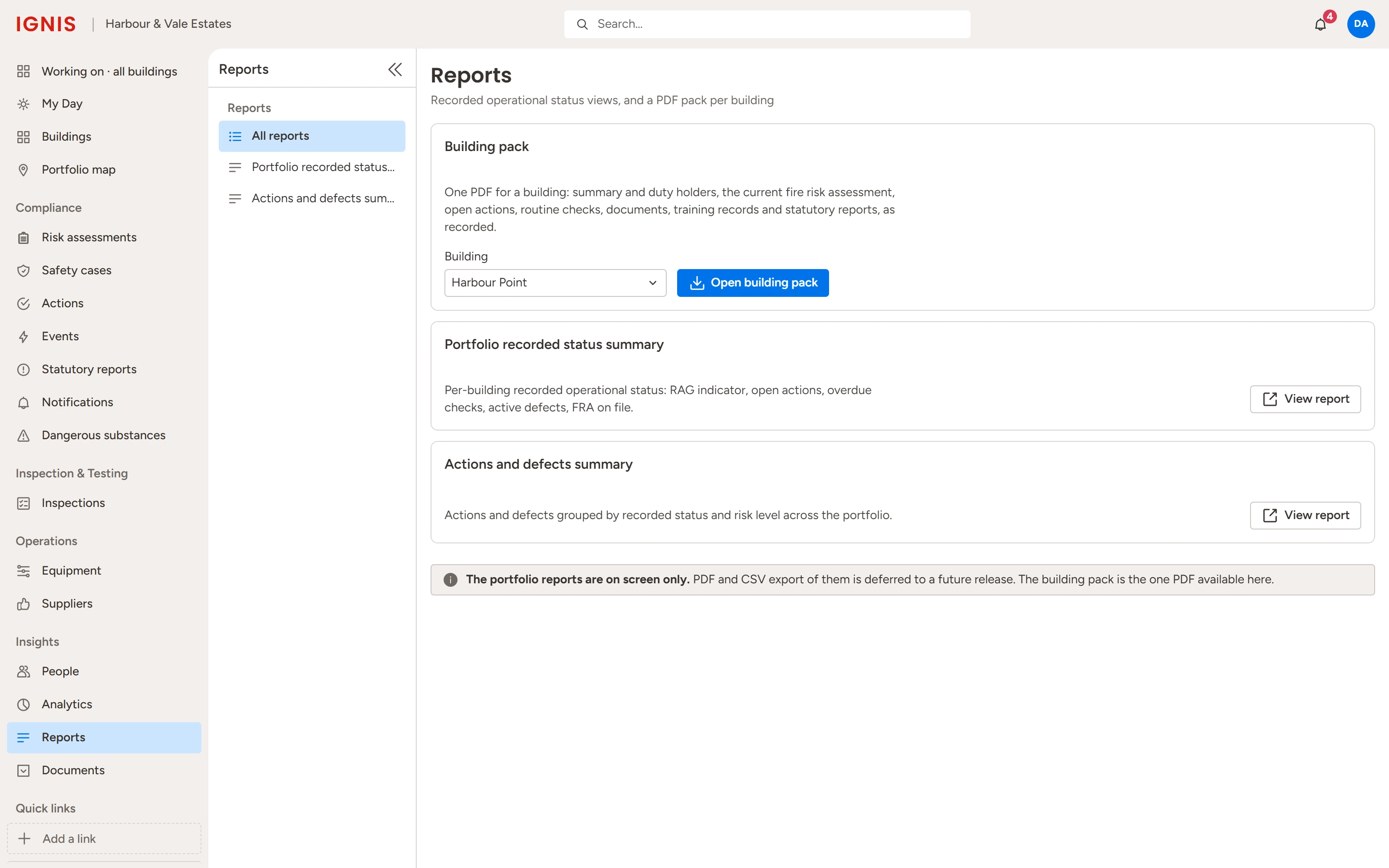
IGNIS reporting, generated from the same record the team works from rather than from a separate return.
Report

Answer the question on the call, not the week after

Overdue checks, open actions and assessments falling due across the portfolio, built from the same live records the field teams write to. When the insurer or the board asks where a building stands, the answer is on screen with the evidence behind it.

Analytics and reporting
What the work sounds like

The problems IGNIS was built to answer

Looking at an assessment against the building's own history is what lets you decide the same afternoon which findings are genuinely the priority.

Head of Fire Safety · Housing provider, 1,200 homes

Fourteen sites, one live position. When the insurer asks for overdue high-severity actions, that is a question you answer on the call, with the evidence attached.

Estates Director · NHS trust, 14 sites

Contractors update from their phones and the certificate lands against the asset. The building file writes itself, which is what an auditor wants to see.

Compliance Manager · University estate, 19 buildings

Looking after 41 buildings with a team of three only works if nothing slips past its due date without somebody being told.

Fire Safety Manager · Managing agent, 41 buildings

Surface and underground plant on one register, with the drill and PEEP records against the site rather than in somebody's folder.

Group HSE Lead · Mining operation, surface and underground

Illustrative of the problems the product is built for. These are not customer quotes: no customer is named or quoted here without written permission.

How access works

Role-based access throughout, scoped to the buildings a person is actually assigned to. Every record carries who changed it and when, and a public asset tag deliberately shows less than the record behind it.

Role-based access · Audit trail · Scoped by assignment

How tags work

Built by duty holders

IGNIS was built inside a fire safety consultancy, against real duty cycles, real regulator returns and real audit questions. It is owned by Aspis Consulting Group.

Housing · Healthcare · Education · Industrial

About us

Where it sits in the law

IGNIS is a tool that helps the Responsible Person evidence their duties under the Fire Safety Order, the Fire Safety Act and the Building Safety Act. It is not a dutyholder, it does not certify, and it does not notify the Fire and Rescue Service or the Regulator.

RRO 2005 · FSA 2021 · BSA 2022 · PAS 79

Building Safety Act

Every closed action starts with a record